Over the last few months I've been thinking a lot about happiness. What is happiness? Am I happy? Might I be happy but not know it? Might it be that I am not happy; rather I just think I am? This is one of the things I've been thinking about recently which I thought I would blog about. This issue seems to come to me in two parts:
First, this is something that I've been prompted to think about on and off all of my life up until now, simply because I am an atheist. Let me explain; over the years (yet recently, much more often), I've encountered people who, upon learning that I am a non-believer, feel sorry for me. Usually these are not moderate believers but very dedicated Christians. They must get a tremendous amount of happiness out of their faith (...or do they?), because they seem to think that because I have no faith, I must be sad; the atheist doesn't see the world in colour, only shades of gray (apparently).
To me this is very telling about how misunderstood atheism (and happiness) is.
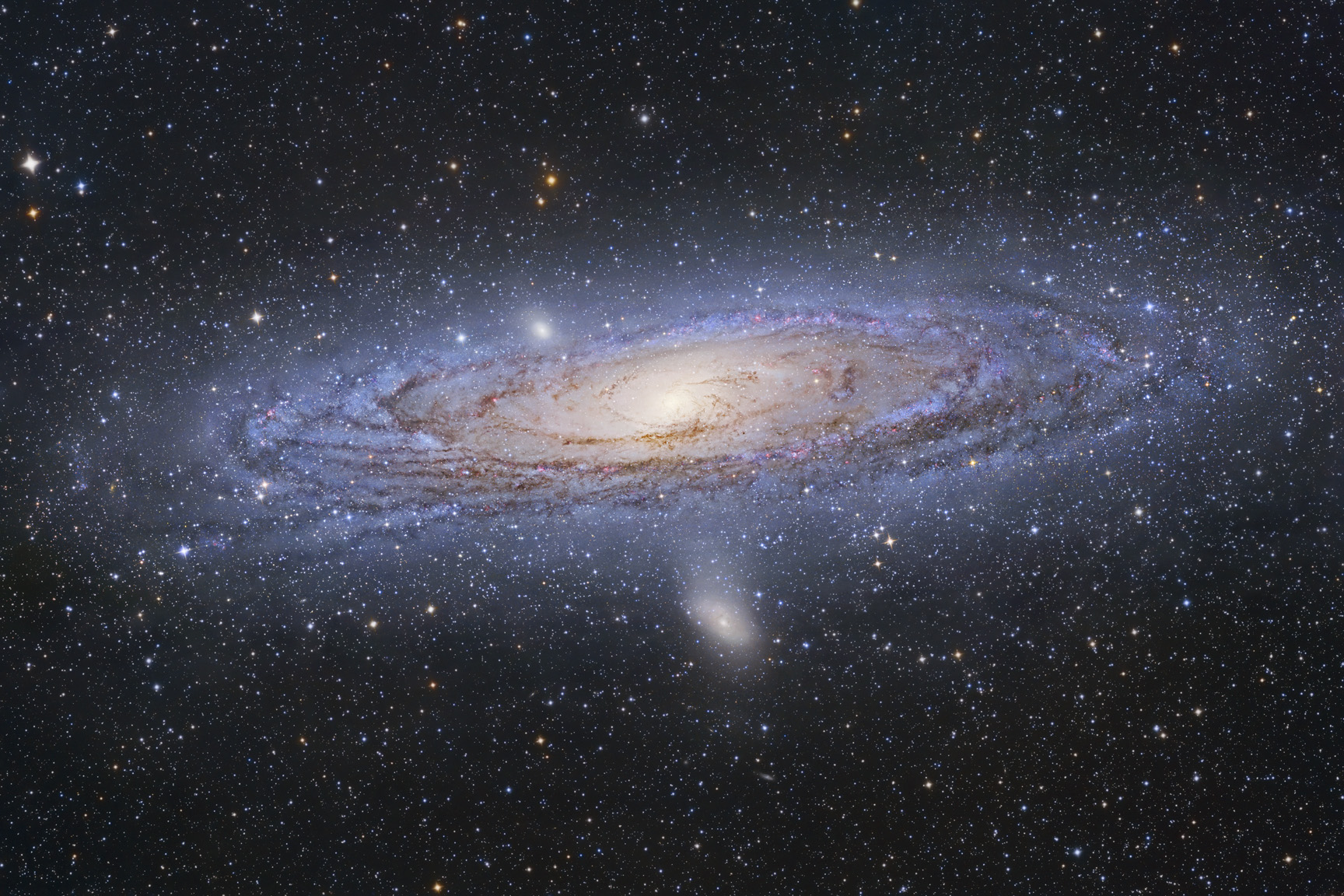
I do not see a dull, gray world. I see a cosmos so huge and so fascinating, that when I go outside and look up at the stars at night, I feel content just to drop to the ground and stare up in wondrous contemplation over the fact that
I am a part of this mystery, most grand.Maybe this is simply a matter of personal incredulity, or maybe I really do understand the Christian worldview; I could not imagine being happy as a Christian, or as a member of any other religion for that matter (I simply use Christianity because that's what I'm most familiar with). How is it possible? How can someone really claim to be happy to believe in something that they not only don't understand, but categorically
cannot understand? How can someone be happy by believing in a God who made a blood sacrifice of his own son; who lets his flock stray from the true path so easily (out of about six billion humans, only around one sixth of them are Christians...and how many of them are actually practicing Christians who've been 'born again'?); who allows war, poverty and disease to run rampant on his own creation (actually, those things are his own creation too!); and who, being God and all, could simply appear and put the whole issue to rest, yet does not?
I accept that there are things that I cannot understand and never will understand. But the happiness I receive comes not from having faith in something that is categorically impossible to understand, but in trying to understand that which is not immediately apparent; that which is difficult to understand yet can still be discovered, if not by me or humans today then by humans in the future. Figuring things out is satisfying and thus makes me happy. But a religious person lives with the belief that the are not only things which aren't figured out, but that there are things which will never be figured out. How unsatisfying!
Things brings me to the second part of the happiness question. What if I'm wrong about what it means to be happy? Being an atheist leaves me satisfied and full of wonder and content. Does this constitute happiness? A few months ago I would have said yes, but now I'm not sure. Let me explain what I think happiness is.
If you asked me a few months ago what happiness for me is, I might have mentioned playing guitar, being with my friends or my family, etc. Sure, these are
things that
make me happy, but what about
happiness itself? What is it? This is where the Christian and I seem at first glance to be in the same boat; we can both name things that make us happy (faith/wonder, reading the Bible/reading a Carl Sagan book), but do we know what happiness itself is?
I've been thinking about this particular part of the happiness question only recently, after I listened to the philosopher
Robert C. Solomon being interviewed on Philosophy Talk Radio. You can listen to the show
here. Although I am still not quite certain, I am starting to come to a new and concise definition of happiness. In fact, this is the only real definition of happiness I've ever had, since as I wrote before, I've only ever been able to describe what makes me happy, not happiness itself.
Going beyond the neurological aspect of happiness, beyond the chemicals in my brain that tell me when I'm happy, I now have a metaphysical sense of happiness (or at least, I'm starting to get one). I now think that happiness comes from fulfillment; happiness, you might say,
is fulfillment. I set myself a task or a goal, it could be anything really, and when I have satisfied myself in completing it I am fulfilled, and thus happy.
So, perhaps the Christian and I are not in the same boat after all. I am happy because, as I just wrote, "I feel content just to drop to the ground and stare up in wondrous contemplation" at the cosmos; thus, I am happy. If happiness amounts to satisfaction and fulfillment, could a Christian ever be happy in the sense that I'm describing? This, I think, would be an interesting topic to bring up the next time a Christian makes the mistake of assuming that I'm unhappy simply because I'm an atheist.